Why phone-first AI is reshaping hiring operations
Recruiting has always been a phone-first business. Candidates get called for screenings, recruiters call hiring managers to debrief, agencies call candidates to negotiate, and the moments that actually decide whether a candidate accepts an offer or walks happen on the phone, not on email or LinkedIn. Even with every applicant tracking system, sourcing tool, and video interview platform in production, the speed and quality of phone interactions still decide who hires the best people.
The challenge isn't whether the phone matters in hiring, it's that the volume of phone-based work has outgrown what most teams can do manually. Application volumes spike on Monday mornings and Sunday nights, candidates expect responses within hours not days, and the routine work of screening, scheduling, reminders, and post-application engagement consumes hours that recruiters should be spending on the candidates closest to closing. The teams that solve this cleanly fill roles faster and cheaper; the ones that don't lose strong candidates to competitors who got to the phone first.
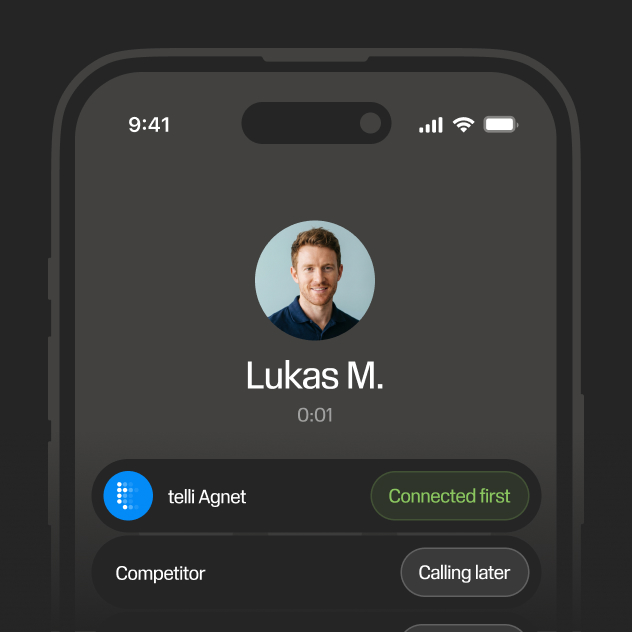
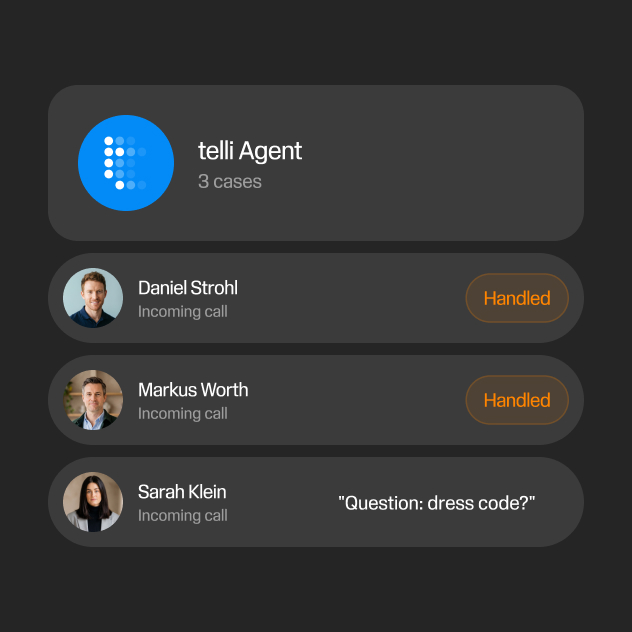
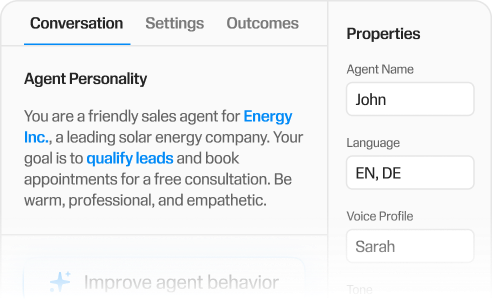
That's the opening voice AI was built for. telli's AI voice agents handle the high-volume call work that floods every recruiting operation — instant screening for new applicants, scheduling and rescheduling interviews, sending personalized reminders, reactivating aged candidate pools — so the recruiters on your team can focus on the conversations that actually drive placements.
Where AI voice agents fit in a hiring operation
The use cases that consistently produce the strongest results in recruiting fall into four buckets.
The first is instant candidate screening. When an applicant submits their resume, the difference between a 30-second callback and a three-day callback is the difference between a strong candidate in process and a strong candidate who took another job. telli calls every new applicant within seconds of application, runs a structured screening conversation, verifies the criteria that matter (right-to-work status, availability, salary expectations, location, key skills, role fit), and books qualified candidates directly into the recruiter's calendar. The candidates who don't meet the bar get cleanly closed out so recruiter time stays on the ones worth pursuing.
The second is interview scheduling and reminders. Phone tag and calendar coordination consume hours of every recruiter's week, and no-show rates on screenings and interviews stay high in teams without consistent reminder workflows. telli schedules interviews directly on the call, sends personalized reminders 24 hours and 1 hour before each interview, offers rescheduling when needed, and updates the recruiter's calendar in real time. No-show rates typically drop measurably within the first month of deployment.
The third is candidate engagement across the hiring journey. Modern hiring is competitive, and silence kills offers. The candidate who applied two weeks ago and hasn't heard from anyone has already moved on. telli runs proactive touchpoints across the full candidate journey — application acknowledgement, interview reminders, post-interview check-ins, offer-stage follow-ups, pre-start engagement — so candidates stay engaged and informed even when the recruiter doesn't have time to call personally.
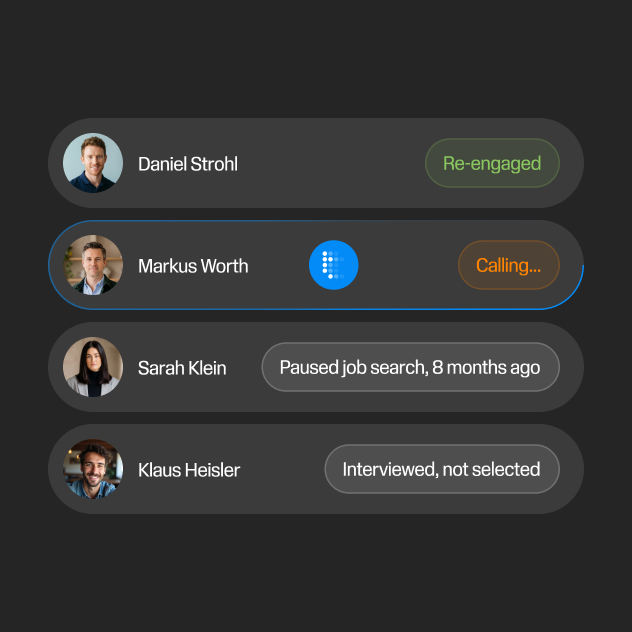
The fourth is aged candidate reactivation. Every recruiting team and staffing agency sits on a goldmine of dormant candidates: silver medalists from past searches, applicants who weren't quite right then, candidates who paused their job search but might be back in market now. Manual reactivation isn't feasible at scale, so these candidates just sit in the ATS while the team keeps paying for fresh sourcing. telli runs personalized reactivation campaigns across thousands of dormant candidates in the background, references their prior application or interview, and routes interested candidates back into your live searches.
Why voice AI works particularly well for high-volume hiring
The economics of high-volume hiring (staffing agencies, frontline workforce recruiting, hourly-wage hiring, seasonal hiring) are even tougher than salaried-role recruiting. Application volumes are enormous, time-to-fill is the dominant metric, and the unit economics on each placement are tight. The teams that win in high-volume hiring are the ones who can screen and schedule at scale without losing candidates to slow response times.
telli is particularly well-suited to this kind of operation. The platform can run thousands of screening calls a day in the candidate's preferred language, at the time they're most likely to pick up, with consistent qualifying logic on every call. Recruiters stop screening basic eligibility and start spending their time on candidate relationships, hiring manager intake, and offer negotiation — the parts of the job that actually require human judgment.
The downstream effects on hiring economics tend to be substantial. Cost-per-hire drops because no recruiter time is wasted on candidates who don't meet basic criteria. Time-to-fill drops because the screening bottleneck disappears. No-show rates drop because reminder workflows actually run consistently. And the candidate experience improves measurably, because every applicant gets a fast, professional first touch instead of a black hole.
Compliance and candidate experience considerations
Hiring is a regulated activity in most markets, especially around candidate data, equal-opportunity standards, recording requirements, and right-to-work verification. telli is built with strict security and privacy standards including GDPR, SOC 2, and EU AI Act alignment, with EU hosting available for European recruiters. All candidate data is encrypted, access is tightly controlled, and processes are audited regularly.
telli's AI voice agents identify themselves clearly at the start of every call. In recruiting specifically, candidates appreciate the transparency, especially when they understand that the AI is handling the routine work (scheduling, basic screening) while the substantive conversations happen with a human recruiter. The teams getting the strongest results treat telli as a way to give every candidate a faster, more consistent first touch, not as a way to remove humans from the hiring conversation.
Voice AI as a permanent layer of recruiting operations
The biggest shift telli sees with successful recruiting customers is that voice AI stops being a project and becomes infrastructure. It's not “what we use during high-volume hiring spikes”, it's the always-on first response that handles the majority of routine candidate communication, runs the engagement motions that keep candidates from dropping off, and routes the substantive conversations to recruiters with full context already captured.
With telli running across your inbound and outbound candidate flows, every applicant gets a fast first touch, every interview gets booked and confirmed, every aged candidate gets a structured re-engagement attempt, and your recruiters spend their week on the conversations that actually move offers across the line. Time-to-fill drops, candidate experience improves, and the cost-per-hire math finally starts to work even as application volumes keep climbing.
That's what AI voice agents look like when they're done right for a recruiting operation: not a replacement for recruiters, but a permanent layer that absorbs the routine work, runs the engagement consistently, and lets the people on your team focus on the conversations that actually close hires.