
AI Voice Agents for Financial Services
Qualify new client leads, resolve account inquiries, and collect overdue balances around the clock. All handled by telli's voice agents, with bank-grade compliance built in, so your advisors and service teams stay focused on the work that drives revenue.












Industry Challenges
The reality of Financial Services operations today
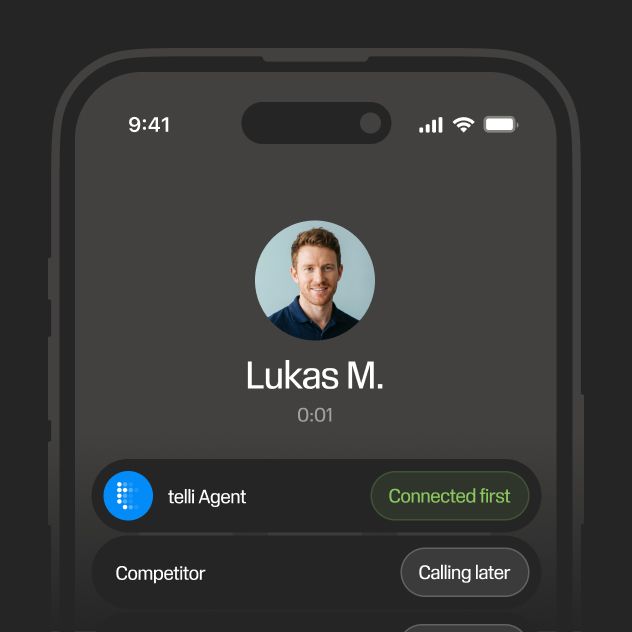
New client leads go cold before an advisor can follow up
Financial products (loans, mortgages, investment accounts, insurance-linked savings) are high-consideration purchases that customers shop across multiple providers in parallel. The first advisor to actually have a conversation usually wins the relationship. Most financial services firms can't deliver sub-minute callbacks consistently, especially on evenings and weekends when many leads come in, so strong-fit prospects routinely sign with whoever picked up the phone first.
- New product inquiries expire in minutes if nobody calls back
- Competitor advisors win clients simply by being faster on the phone
- telli calls every new lead within seconds of form submission, 24/7, and books qualified consultations directly into your advisors' calendars
Routine account questions buy advisor time that should go to advising
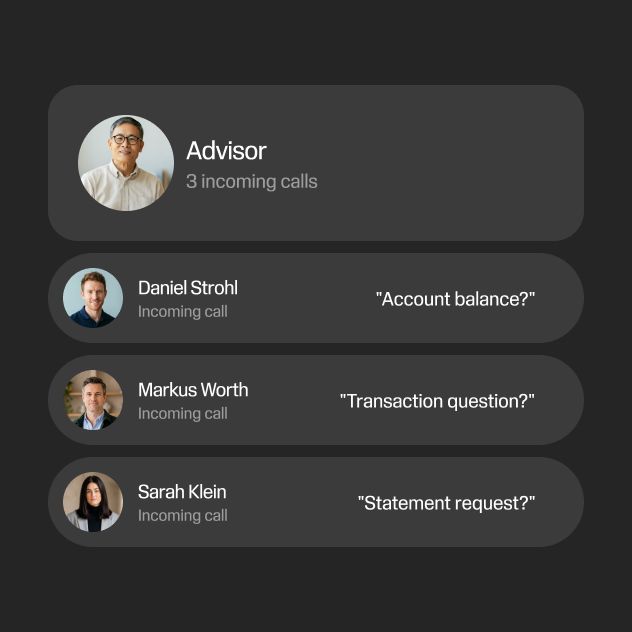
Account balances, transaction questions, statement clarifications, document requests, online banking issues, basic product questions: these calls flood every financial services operation and consume the day. None of this work requires an advisor's expertise, but it still has to be handled, and it pulls licensed staff away from the conversations that actually move clients toward outcomes (loan applications, investment decisions, retirement planning).
- Routine account questions eat advisor and service-team capacity
- Customers sit in hold queues while routine work consumes the front line
- telli handles routine account inquiries end-to-end and warm-transfers complex cases with structured context
Overdue balances and collections workflows damage relationships when handled poorly
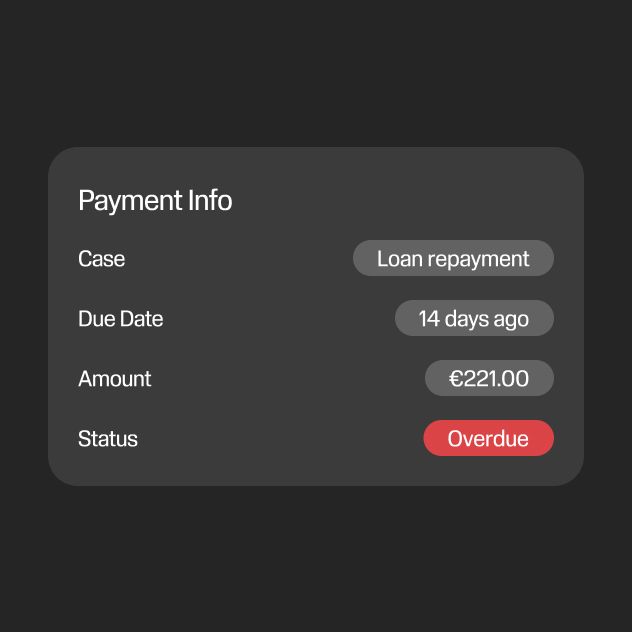
Loan repayments, credit card minimums, premium installments, and subscription fees go overdue every month for predictable reasons: expired cards, SEPA mandate failures, life changes, simple oversight. The typical response (email reminders that get ignored, then formal collections notices that damage the relationship) leaves a wide middle gap. Friendly, timely phone reminders that resolve the issue before it hardens usually don't exist because manual phone calls don't scale.
- Email collections gets ignored; formal collections damages relationships
- Manual phone reminders don't scale, so DSO drifts and write-offs grow
- telli runs friendly payment reminder calls automatically at the right point in the cycle, resolves most issues on the spot, and reduces DSO without damaging customer trust
Read more about our product and features here
Our platformUse Cases
How Financial Services teams uses telli
Lead Qualification
Qualify every new client lead the moment they request information. telli's voice agents call back within seconds, check product fit, eligibility, and timeline, and book qualified consultations directly into your advisor's calendar.
Customer Support
Resolve account inquiries faster. telli answers every inbound call instantly, handles routine balance, transaction, and product questions end-to-end, and warm-transfers complex cases to your advisors with structured context.
AI Receptionist
Answer every client call instantly, 24/7. telli handles appointment booking, basic intake, document requests, and routing, then escalates account-specific or licensed-advisor questions with full context.
Payment Reminders
Collect overdue balances without damaging the client relationship. telli runs friendly payment reminder calls automatically, captures commitments, updates payment methods on the call, and routes disputes to your collections team.
Financial Services
Find out more about Financial Services with telli
Why phone-first AI is reshaping financial services operations
Financial services is still a phone industry. New client conversations happen on the phone, even when the lead came through a digital channel. Account questions, transaction clarifications, document requests, and product inquiries flow through call centers every day. Loan applications, mortgage discussions, and investment conversations all involve real conversations with real advisors. Even the most digitally native fintechs find that phone volume stays high, because financial decisions are consequential and customers want to talk to a person at the moments that matter.
The challenge isn't whether the phone matters in financial services, it's that the workload has structurally outgrown what most operations can absorb economically. New leads expire in minutes, routine account questions consume the front line, advisor calendars stay full of low-value inquiries, and collections workflows leave a wide gap between ignored emails and formal dunning notices. The firms that solve this cleanly win more clients and retain more relationships; the ones that don't lose business quietly to competitors who got to the phone faster.
That's the opening voice AI was built for. telli's AI voice agents handle the high-volume call work that floods every financial services operation — qualifying new leads within seconds, absorbing routine inbound service, running friendly collections reminders, and surfacing upgrade opportunities — so the licensed advisors and service specialists on your team can focus on the conversations that actually require their expertise.
Where AI voice agents fit in a financial services operation
The use cases that consistently produce the strongest results in financial services fall into five buckets.
The first is inbound lead qualification. When a prospect requests a quote, a consultation, or product information, the difference between a 30-second callback and a four-hour callback is the difference between a booked appointment and a lost client. telli calls every new lead within seconds of submission, verifies the qualifying details that matter (income range, product fit, eligibility, existing relationships, decision timeline), and books qualified consultations directly into your advisor's calendar. Unqualified leads get cleanly closed out so advisor time stays on serious prospects.
The second is inbound client service at scale. Most inbound calls aren't complex: balance inquiries, transaction questions, statement clarifications, document requests, online banking issues, product information. telli answers every inbound call instantly, around the clock, and handles these requests end-to-end. For calls that need a licensed advisor (complex product questions, account-specific advice, regulated transactions), telli warm-transfers to the right person with structured context already captured.
The third is payment reminders and collections. Financial services firms face predictable overdue-payment volume every month across loans, credit lines, premiums, and subscription products. The standard response (email reminders that get ignored, then formal collections notices that damage relationships) leaves a wide middle gap. telli fills that gap with friendly, timely phone reminders at the right point in the cycle. Most calls get resolved on the spot: expired cards updated, SEPA mandates reauthorized, payment dates committed. The cases that need a collections specialist get cleanly escalated. DSO drops measurably, and the customer relationship stays intact.
The fourth is proactive client engagement and upsell. Refinancing opportunities, product upgrades, plan changes, lifecycle touchpoints: all of these matter to revenue per client, and all of them are the first things to slip when teams are busy. telli runs proactive trigger-based outreach (rate-change events, anniversary milestones, usage thresholds, life-event triggers) and warm-transfers interested clients to advisors for closing.
The fifth is appointment-driven workflows. Many financial services products require scheduled appointments (mortgage consultations, investment reviews, account-opening sessions). telli handles the full appointment workflow: booking, confirmations, reminders, rescheduling, and post-appointment follow-ups. No-show rates drop, advisor calendars stay full, and the operational overhead of scheduling disappears.
Compliance, regulation, and the bar for AI in financial services
Financial services is among the most heavily regulated industries telli operates in, with strict requirements around customer data, recording, consent, suitability, advice boundaries, and consumer protection. telli is built with strict security and privacy standards including GDPR, SOC 2, HIPAA (for health-adjacent insurance products), and EU AI Act alignment, with EU hosting available for European firms. All conversation data is encrypted at rest and in transit, access is tightly controlled and audited, and processes meet enterprise-grade standards.
Just as important is the boundary between operational work and regulated advice. telli is intentionally scoped to administrative, service, and qualification tasks — not to providing regulated financial advice or making suitability determinations. The AI handles account inquiries, routine service, qualification questions, scheduling, and payment reminders, but anything that requires regulated advice gets warm-transferred to a licensed advisor with full conversation context attached. This boundary is built into the platform deliberately because the use of AI in financial services requires clear guardrails around what's automated and what isn't.
telli also supports the call recording, disclosure, and consent workflows that financial regulators require in many markets, so the platform fits naturally into the compliance frameworks your firm already operates within.
Why financial services firms choose voice AI over staffing up
The traditional way to handle financial services call volume is to staff up: more service agents, more inside sales, more collections specialists, more administrative support. The economics make this difficult, especially in a regulatory environment where every additional headcount carries training, licensing, and oversight costs. Hiring is slow, training takes months, and the regulated nature of much of the work means turnover is structurally expensive.
Voice AI changes the math. telli handles unlimited concurrent calls without adding headcount, runs at a fraction of the cost of staffed alternatives, and delivers consistent service quality on every interaction. The firms getting the strongest results don't think of AI as a cost-cutting tool, they think of it as the operational layer that frees licensed staff to do the regulated, judgment-heavy work that only they can do.
The downstream effects on financial services economics tend to be substantial. Cost-per-acquired-client drops because no advisor time is wasted on unqualified leads. Average handle time drops because licensed staff only see pre-qualified, pre-contextualized cases. DSO drops because friendly reminders go out at the right point in the cycle. Client satisfaction climbs because customers stop sitting in queues. And the proactive motions that firms have always known they should run finally become operationally feasible.
Voice AI as a permanent layer of financial services operations
The biggest shift telli sees with successful financial services customers is that voice AI stops being a project and becomes infrastructure. It's not “the tool we use for after-hours coverage”, it's the always-on first response that handles the majority of inbound and outbound call work, runs the proactive motions consistently, and routes regulated conversations to licensed advisors with full context already captured.
With telli running across your inbound and outbound flows, every lead gets a callback in seconds, every routine service call gets answered instantly, every overdue payment gets a friendly reminder at the right moment, and every advisor calendar fills with consultations that actually drive revenue. Your licensed staff stop spending their day on intake and triage and start spending it on the regulated, judgment-heavy work that actually grows the firm.
That's what AI voice agents look like when they're done right for a financial services operation: not a replacement for licensed advisors, but a permanent operational layer that absorbs the routine and qualification work, runs the proactive engagement consistently, and lets the people on your team focus on the regulated conversations only humans can have.
Enterprise-Grade Protection by Default.

Resources
Other Resources

FAQ
Frequently Asked Questions
How do AI voice agents help financial services firms?
AI voice agents help financial services firms absorb the high-volume call work that determines whether new clients get won, existing clients stay engaged, and overdue balances get collected. telli calls back every new lead within seconds, handles routine inbound service end-to-end, runs friendly payment reminders, surfaces refinancing and upgrade opportunities, and warm-transfers regulated conversations to licensed advisors with structured context. The result is faster lead conversion, lower DSO, better client retention, and licensed staff focused on the work that actually requires their expertise.
Does telli provide regulated financial advice?
No. telli is intentionally scoped to administrative, service, and qualification tasks, not regulated financial advice. The AI handles account inquiries, routine service, qualification, scheduling, and payment reminders. Anything that requires regulated advice (specific product recommendations, suitability assessments, complex disclosures, investment guidance) gets warm-transferred to a licensed advisor with full conversation context attached. This boundary is built into the platform as a compliance and consumer-protection guardrail.
Is telli compliant for financial services?
Yes. telli is built with strict security and privacy standards including GDPR, SOC 2, HIPAA (for health-adjacent insurance products), and alignment with the EU AI Act, with EU hosting available for European firms. All data is encrypted at rest and in transit, access is tightly controlled and audited, and processes meet enterprise-grade standards. telli also supports the call recording, disclosure, and consent workflows that financial regulators require in many markets.
Can telli qualify new client leads?
Yes. telli calls every new lead within seconds of form submission and runs a structured qualification conversation. The AI verifies the qualifying details that matter for your specific products (income range, product fit, eligibility criteria, existing relationships, decision timeline, regulatory requirements) and either books a qualified consultation directly into your advisor's calendar or cleanly closes out leads that aren't a fit. Advisors only see prospects who've already cleared a real qualification bar.
Can telli handle routine account inquiries?
Yes. telli answers every inbound call instantly, around the clock, and handles common financial services inquiries end-to-end: balance questions, transaction clarifications, statement requests, document handling, online banking troubleshooting, product information, and appointment scheduling. For calls that need a licensed advisor or that involve regulated decisions, telli warm-transfers to the right person with structured context captured.
How does telli help with collections?
telli automates the friendly, timely phone reminder layer that most financial services firms don't have. The platform runs reminder calls at the right point in the aging cycle, in a polite, professional tone, and resolves the most common issues on the spot: expired cards, failed SEPA mandates, missed emails, payment commitments. Complex disputes or hardship situations get cleanly escalated to your collections team. DSO drops measurably, write-offs decrease, and the client relationship stays intact — no aggressive dunning tone required.
Does telli integrate with financial services CRMs?
Yes. telli integrates directly with major CRMs (Salesforce, HubSpot, Pipedrive, Microsoft Dynamics, Zoho) and supports custom integrations with financial services-specific systems (core banking, loan origination, wealth management platforms) via API. Conversation outcomes, qualification status, and payment commitments sync in real time, so your advisors and service teams always have current data without manually transcribing notes.
How does telli handle regulated conversations?
telli is designed to recognize when a conversation crosses into regulated territory and to escalate cleanly. Routine service, qualification, and administrative tasks run end-to-end on the AI. Anything involving regulated advice, suitability determinations, complex disclosures, or licensed-advisor-only conversations gets warm-transferred to the right person with full context captured. telli also supports the disclosure, consent, and recording workflows that financial regulators require, configurable per market and product line.
Will clients know they're talking to AI?
Yes, and that's by design. telli's AI voice agents identify themselves clearly at the start of every call. In financial services specifically, this transparency matters: clients consistently rate AI interactions higher when they know upfront that they're speaking with an AI than when they suspect it but aren't told. The trust dividend from being upfront is real, especially in a context as sensitive as financial decisions.