
AI Voice Agents for Energy
Reach customers proactively, handle service inquiries, and follow up on overdue invoices, all around the clock. telli's voice agents absorb the high-volume call work that floods every energy operation, so your team stays focused on the customers who need them.











Industry Challenges
The reality of Energy operations today
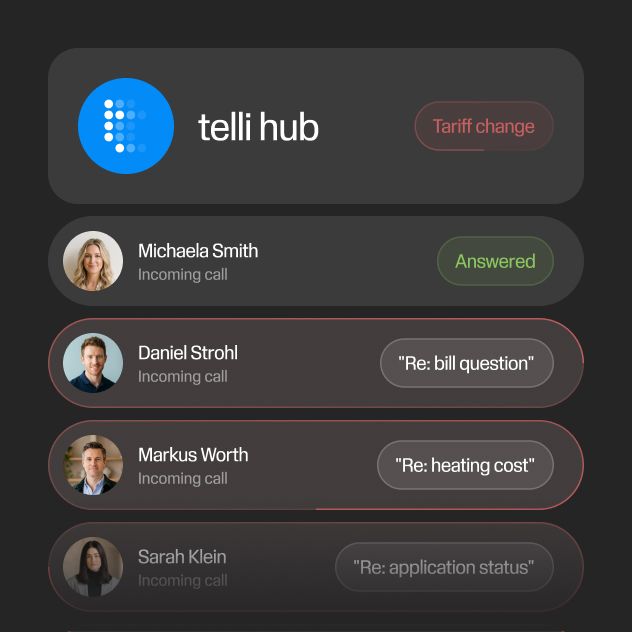
Customer inquiries flood the team during tariff changes and price spikes
Energy is a high-event-volume industry. A regulatory change, a tariff update, a heating-season cold snap, or a media cycle around energy prices can multiply inbound call volume in days. Most providers can't staff for peak without overstaffing for the trough, so during spikes customers sit on hold, hit voicemail, or give up entirely. Retention and brand perception take a hit faster than most teams measure.
- Inbound call volume spikes overwhelm fixed-capacity service teams
- Hold times and missed calls damage retention and customer satisfaction scores
- telli absorbs unlimited concurrent calls instantly, with no staffing constraint at peak
Routine billing and meter questions consume call center capacity
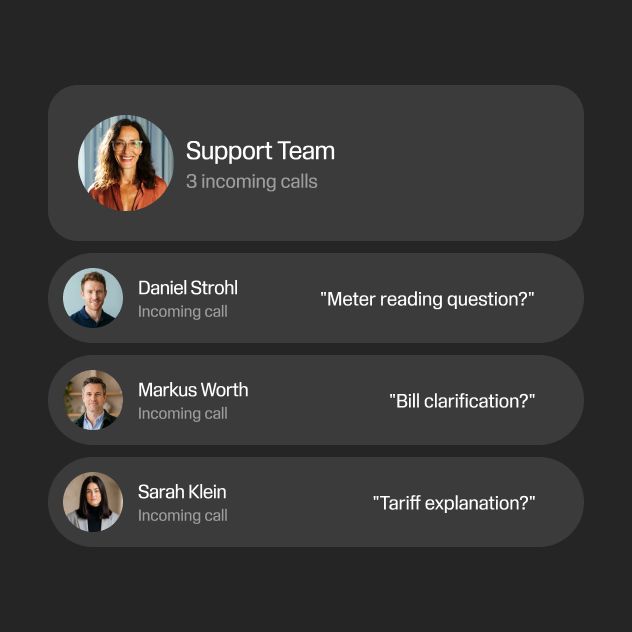
The bulk of inbound calls to an energy provider aren't complex: meter reading questions, billing inquiries, tariff explanations, address changes, payment method updates, contract questions. Every one of these calls is structurally similar, structurally predictable, and structurally a poor use of a trained agent's time, but they still have to be handled, and they pull staff away from the customers with genuinely complex problems.
- Routine billing and contract questions consume agent time that should go to complex cases
- The same handful of questions keep landing in the queue, day after day
- telli handles routine inquiries end-to-end using your knowledge base, and escalates complex cases with full context
Overdue invoices and dunning workflows leak revenue silently
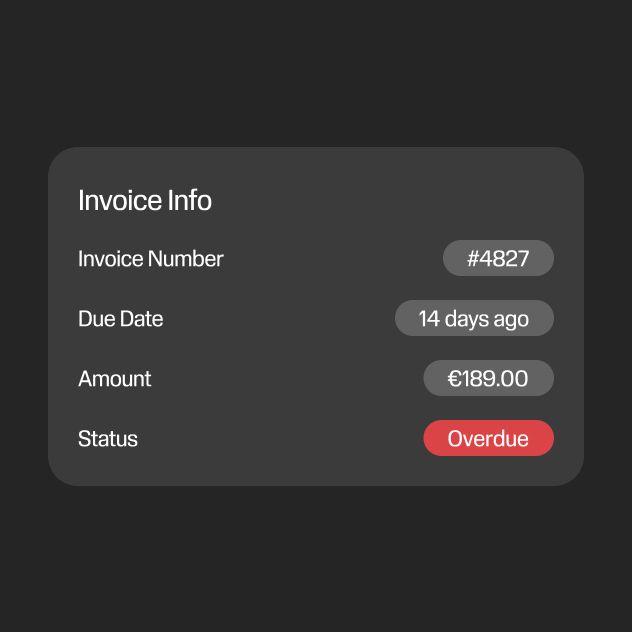
Energy bills go overdue every month for predictable reasons: expired cards, SEPA mandate failures, forgotten invoices during busy periods, life changes that disrupt payment routines. Most providers default to email reminders that get ignored, then escalate to formal dunning notices that damage the customer relationship. The middle layer (friendly, timely phone reminders that resolve the issue before it hardens) usually doesn't exist because manual phone calls don't scale to thousands of overdue accounts a month.
- Email reminders get filtered out by exactly the customers who most need them
- Manual dunning calls don't scale, so DSO drifts upward
- telli runs friendly payment reminder calls automatically at the right point in the aging cycle, resolves most issues on the spot, and reduces DSO measurably
Read more about our product and features here
Our platformUse Cases
How Energy teams uses telli
Customer Support
Resolve customer inquiries faster, even during volume spikes. telli answers every inbound call instantly, handles routine billing, meter, and tariff questions end-to-end, and warm-transfers complex cases to your team with structured context.
Customer Engagement
Run proactive outreach across the customer lifecycle. From tariff renewals to meter reading reminders and service follow-ups, telli runs the touchpoints that keep customers informed and retained.
Payment Reminders
Collect overdue energy bills without straining the relationship. telli runs friendly reminder calls automatically, captures payment commitments, updates payment methods on the call, and routes disputes to your billing team.
Lead Qualification
Qualify new customer leads the moment they request a tariff quote. telli's voice agents call back within seconds, check eligibility and consumption details, and book qualified consultations directly into your sales team's calendar.
Energy
Find out more about Energy with telli
Why phone-first AI is reshaping energy operations
Energy is one of the most phone-dependent industries in B2C. Customers call about bills, meter readings, tariff changes, payment problems, service outages, contract questions, and the dozens of routine issues that don't fit cleanly into a self-service portal. Even with every customer app, online billing system, and chatbot in production, phone volume at most energy providers stays stubbornly high, because customers call when they're confused about a bill, worried about a price change, or facing a payment issue, and they want a real conversation, not a chatbot.
The challenge isn't whether the phone matters in energy, it's that the call volume has structurally outgrown what most providers can absorb. Call volume is famously spiky: a regulatory change, a heating-season cold snap, or a media cycle around energy prices can multiply inbound calls in days. The fixed capacity of a traditional call center can't flex fast enough, so during spikes customers sit in queues, hit voicemail, or give up. Meanwhile the proactive motions that drive retention (tariff renewal calls, meter reading reminders, payment follow-ups) are the first things to slip when the team is stretched thin.
That's the opening voice AI was built for. telli's AI voice agents handle the high-volume call work that floods every energy operation — absorbing inbound service spikes, resolving routine billing and meter questions end-to-end, running proactive customer outreach, and collecting overdue payments — so the agents on your team can focus on the customers and conversations that genuinely need a person.
Where AI voice agents fit in an energy operation
The use cases that consistently produce the strongest results for energy providers fall into four buckets.
The first is inbound customer service at scale. Most inbound energy calls aren't complex: billing questions, meter reading clarifications, tariff explanations, contract changes, payment method updates, address changes. telli answers every inbound call instantly, around the clock, and handles these requests end-to-end using your knowledge base. For calls that need a human (complex billing disputes, account-specific situations, regulated changes), telli warm-transfers to the right person with a full conversation summary captured.
The second is proactive customer engagement across the lifecycle. Tariff renewals, contract renewals, meter reading reminders, post-installation check-ins, satisfaction surveys: all of these matter to retention, and all of them are the first things to fall when the team is busy. telli runs these motions automatically in the background, references each customer's specific account and tariff, and syncs outcomes back to your CRM.
The third is payment reminders and dunning. Energy providers face predictable overdue-invoice volume every month, and the standard response (email reminders that get ignored, then formal dunning notices that damage the relationship) leaves a wide middle gap. telli fills that gap with friendly, timely phone reminders at the right point in the aging cycle. Most calls get resolved on the spot: expired cards updated, SEPA mandates reauthorized, payment dates committed. The handful of cases that need a billing specialist get cleanly escalated. DSO drops measurably, and the customer relationship stays intact.
The fourth is inbound lead qualification for tariff sales. When a prospect requests a tariff quote or a switch consultation, the difference between a 30-second callback and a four-hour callback is the difference between a booked consultation and a lost customer. telli calls every new lead within seconds, verifies the qualifying details that matter (consumption profile, contract status with current provider, switching window, household composition), and books qualified consultations directly into your sales team's calendar.
Why energy providers choose voice AI over staffing up
The traditional way to handle energy call volume is to staff up: more service agents, more dunning specialists, more contact center capacity. The economics make this difficult, especially for energy providers operating on regulated margins. Hiring is slow, training is expensive, and the spiky nature of energy call volume means providers have to choose between overstaffing for peaks (wasteful) or understaffing for troughs (damaging at peak times). Most providers end up understaffed during the moments that matter most.
Voice AI changes the math. telli handles unlimited concurrent calls without adding headcount, runs at a fraction of the cost of staffed alternatives, and delivers consistent service quality regardless of volume. The providers getting the strongest results don't think of AI as a cost-cutting tool, they think of it as the capacity layer that absorbs the spikes without forcing the cost structure to bear permanent peak-capacity overhead.
The downstream effects on operational metrics tend to be substantial. Average hold times collapse because the AI can handle unlimited concurrent calls. First-call resolution rates climb because the AI handles a larger share of routine cases end-to-end. DSO drops because friendly payment reminders go out at the right point in the aging cycle automatically. Customer satisfaction scores climb because customers stop sitting in queues during peak periods. And the proactive motions that providers have always known they should run finally become operationally feasible.
Compliance and regulatory rigor in energy markets
Energy is one of the most heavily regulated industries telli operates in, particularly around customer data, billing transparency, dunning workflows, and consumer protection. telli is built with strict security and privacy standards including GDPR, SOC 2, and EU AI Act alignment, with EU hosting available for European providers. All conversation data is encrypted, access is tightly controlled, and processes are audited regularly.
For energy providers operating across multiple regions or markets with different regulatory frameworks, this matters operationally. telli supports the call recording, disclosure, and consent workflows that energy regulators require in many markets, and the platform fits naturally into the compliance frameworks energy providers already operate within.
Voice AI as a permanent layer of energy operations
The biggest shift telli sees with successful energy customers is that voice AI stops being a project and becomes infrastructure. It's not “the tool we use during the heating-season call spike”, it's the always-on first response that handles the majority of inbound calls year-round, runs the proactive outreach that drives retention, and collects the overdue invoices that used to sit unworked in the AR aging report.
With telli running across your inbound and outbound flows, every customer call gets answered instantly, every overdue invoice gets a friendly reminder at the right moment, every tariff renewal gets a proactive touch, and every meter reading reminder goes out on time. Your service team stops drowning in routine inquiries and starts spending its hours on the complex cases that genuinely need human judgment. Your AR team stops chasing overdue accounts manually. Your sales team stops working through lead callback queues that no longer reflect peak intent.
That's what AI voice agents look like when they're done right for an energy operation: not a chatbot replacement, but a permanent operational layer that absorbs the routine work, runs the proactive motions consistently, and keeps the team focused on the work only humans can do.
Enterprise-Grade Protection by Default.

Resources
Other Resources
FAQ
Frequently Asked Questions
How do AI voice agents help energy providers?
AI voice agents help energy providers absorb the high-volume, spiky call work that determines whether customer experience and retention hold up at peak. telli answers every inbound call instantly, handles routine billing and meter questions end-to-end, runs proactive tariff and renewal outreach, and collects overdue invoices with friendly reminder calls. The result is shorter hold times, lower DSO, better retention, and a team that gets to focus on the genuinely complex cases.
Can telli handle inbound energy customer service calls?
Yes. telli answers every inbound call instantly, around the clock, and handles common energy questions end-to-end: billing details, meter reading clarifications, tariff explanations, contract changes, payment method updates, address changes, and account information. For calls that need a human agent (complex disputes, regulated changes, sensitive situations), telli warm-transfers to the right person with a full conversation summary captured.
How does telli help reduce DSO for energy providers?
telli automates the friendly, timely phone reminder layer that most energy providers don't have. The platform runs reminder calls at the right point in the aging cycle, in a polite, professional tone, and resolves the most common issues on the spot (expired cards, failed SEPA mandates, missed emails, payment date commitments). Complex disputes get cleanly escalated to your billing team. Cash gets collected closer to the original due date, and DSO drops measurably without staffing up an internal dunning team.
Can telli run proactive outreach for tariff renewals?
Yes. telli runs automated trigger-based outreach for tariff renewals, contract renewals, post-installation check-ins, and seasonal touchpoints. The AI references each customer's specific account and tariff, captures intent in real time, and surfaces at-risk customers to your retention team. The retention math on consistent proactive outreach tends to justify the investment quickly.
Is telli compliant for energy operations?
Yes. telli is built with strict security and privacy standards including GDPR, SOC 2, and alignment with the EU AI Act, with EU hosting available for European providers. All data is encrypted, access is tightly controlled, and processes are audited regularly. telli also supports the call recording, disclosure, and consent workflows that energy regulators require in many markets.
Does telli integrate with energy CRMs?
Yes. telli integrates directly with major CRMs (Salesforce, HubSpot, Pipedrive, Microsoft Dynamics, Zoho) and supports custom integrations with energy-specific billing and customer information systems via API. Service outcomes, payment commitments, and renewal results sync in real time, so your service and AR teams always have current data without manually transcribing notes.
How does telli handle inbound call spikes?
telli's capacity is not constrained by staffing. The platform handles unlimited concurrent calls instantly, which is the key advantage during energy-industry call spikes (tariff changes, cold snaps, regulatory deadlines, media cycles around energy prices). Where a fixed-capacity call center would force customers into long hold queues or voicemail, telli answers every call immediately and either resolves the issue end-to-end or warm-transfers to the right human with structured context.
How quickly can an energy provider launch telli?
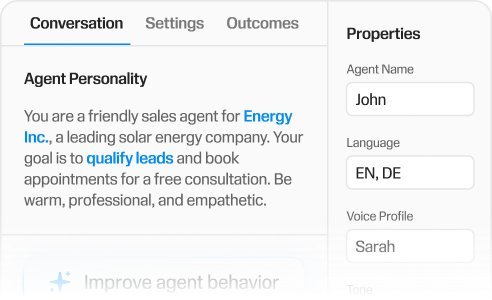
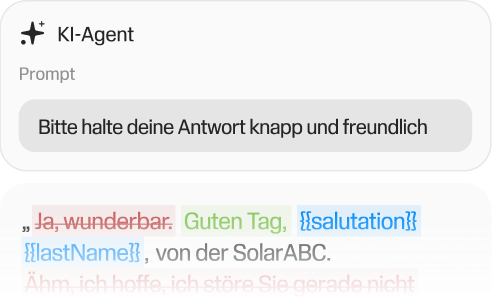
Most providers go live within days to a few weeks, depending on integration complexity. telli's prompt editor (telli studio) lets your team configure call flows, scripts, and routing logic without engineering involvement, and standard CRM integrations are ready out of the box. The providers getting the strongest results typically start with one workflow (often payment reminders or inbound service handling), measure the impact on DSO or hold time, and expand from there.
Will customers know they're talking to AI?
Most don't, and many don't believe it even after being told. telli's AI voice agents are designed to sound natural, human-like, and conversational. For energy specifically, this matters: customers calling about a confusing bill or a service issue need a calm, professional, helpful conversation, not a stilted robocall. A natural conversation lands like a competent service rep and resolves the issue without friction.