
AI Voice Agents for Telecom
Answer customer calls instantly, resolve plan and billing questions, and win back at-risk subscribers around the clock. All handled by telli's voice agents, so your team stays focused on the customers who genuinely need a human.












Industry Challenges
The reality of Telecom operations today
Subscriber churn happens silently between renewal cycles
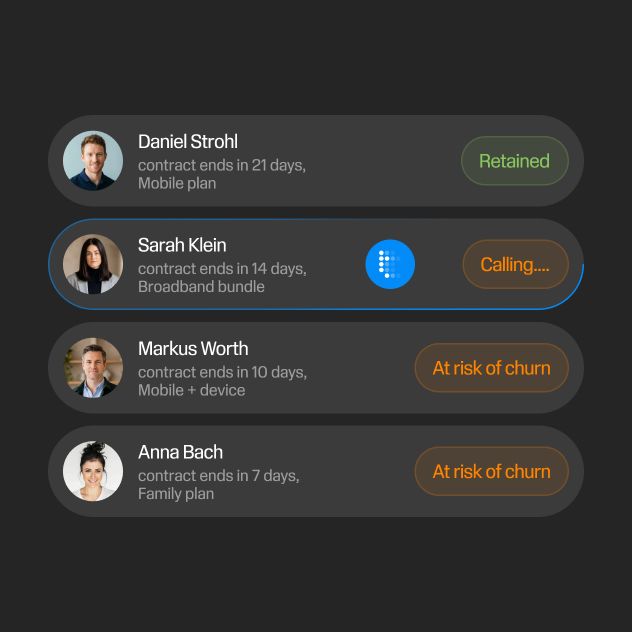
Telecom is a churn business. Every month, a predictable percentage of subscribers reach the end of their contract, get a better offer from a competitor, or quietly stop paying because something changed in their life. Most providers run renewal outreach inconsistently or not at all, so churn happens silently and gets noticed only when the quarterly retention numbers come in. The customers who could have been saved with a timely conversation slip out the back door while the team is focused on new acquisition.
- Subscribers churn quietly between renewal cycles, often before retention can intervene
- Generic email outreach gets ignored by exactly the customers most likely to leave
- telli runs proactive retention calls weeks before contract end, captures intent, and surfaces at-risk subscribers to your team
Routine plan and billing questions drown the support team
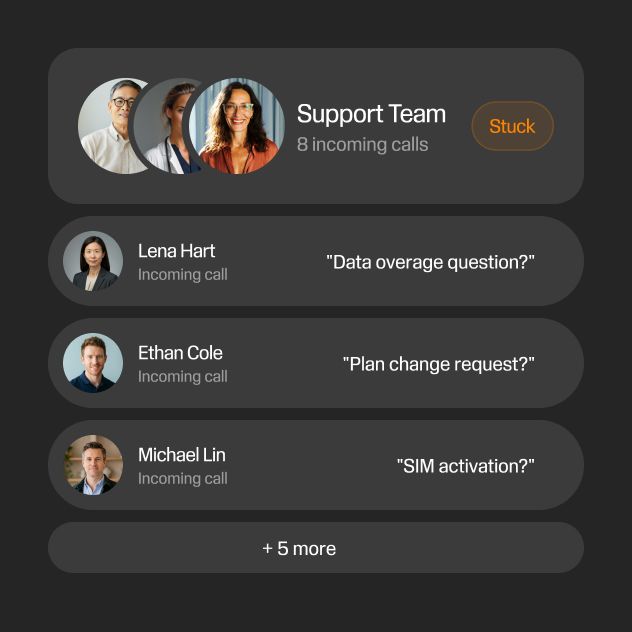
The bulk of inbound calls to a telecom provider aren't complex: data overage questions, billing clarifications, plan change requests, address updates, SIM activation, payment method changes. The volume is enormous, the calls are structurally similar, and the work has to happen, but it consumes hours that should go to the customers with genuinely complex technical or service issues. Hold times creep up, the team gets burned out on repetitive calls, and customer experience scores quietly slide.
- Routine plan and billing questions eat support team capacity that should go to complex cases
- Hold times damage customer experience and drive negative reviews
- telli answers every inbound call instantly, handles routine questions end-to-end, and warm-transfers technical or escalation cases with full context
Overdue invoices and dunning workflows damage relationships at scale
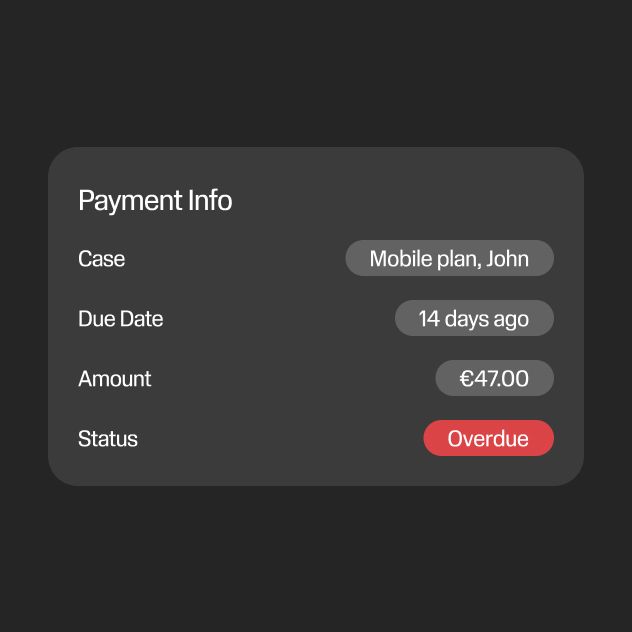
Telecom bills go overdue every month for predictable reasons: expired cards, SEPA mandate failures, customers traveling, life changes that disrupt payment routines. Most providers default to email reminders that get ignored, then escalate to formal dunning notices and service interruptions that damage the relationship. The middle layer (friendly, timely phone reminders that resolve the issue before it hardens) usually doesn't exist because manual calls don't scale to tens of thousands of overdue accounts a month.
- Email reminders get ignored, then service interruptions damage the relationship
- Manual dunning calls don't scale across high-volume telecom subscriber bases
- telli runs friendly payment reminder calls automatically at the right point in the aging cycle, resolves most issues on the spot, and reduces DSO without straining customer trust
Read more about our product and features here
Our platformUse Cases
How Telecom teams uses telli
Customer Support
Resolve subscriber inquiries faster, even during volume spikes. telli answers every inbound call instantly, handles routine plan, billing, and account questions end-to-end, and warm-transfers technical or escalation cases to your team with structured context.
AI Receptionist
Answer every subscriber call instantly, 24/7. telli handles plan change requests, SIM activations, basic technical triage, and routing, then escalates complex issues with full conversation context.
Payment Reminders
Collect overdue telecom bills without damaging the subscriber relationship. telli runs friendly reminder calls automatically, captures payment commitments, updates payment methods on the call, and routes disputes to your billing team.
Upselling
Grow revenue per subscriber from your existing base. telli reaches out at the right moment with relevant offers (plan upgrades, add-on services, device upgrades, multi-line discounts), captures interest, and warm-transfers ready customers to your sales team.
Telecom
Find out more about Telecom with telli
Why phone-first AI is reshaping telecom operations
Telecom is one of the most call-heavy industries in B2C. Subscribers call about bills, data overages, plan changes, SIM issues, network problems, payment troubles, contract end dates, and the dozens of routine issues that don't fit cleanly into a self-service app. Even with every customer portal, mobile app, and chatbot in production, telecom call volume stays stubbornly high, because subscribers call when they're confused about a charge, frustrated by a service issue, or considering switching providers, and they want a real conversation, not a chatbot.
The challenge isn't whether the phone matters in telecom, it's that the call volume has structurally outgrown what most providers can absorb economically. New plan inquiries flood in around the clock, churn-risk subscribers reach end-of-contract every day without consistent outreach, routine billing questions consume the support team, and overdue-payment cycles leak revenue silently. The telecom providers that solve this cleanly retain subscribers longer, collect cash faster, and grow ARPU through consistent upsell motions; the ones that don't bleed churn and DSO to whoever got to the phone first.
That's the opening voice AI was built for. telli's AI voice agents handle the high-volume call work that floods every telecom operation: absorbing inbound service spikes, running proactive retention outreach, collecting overdue payments with friendly calls, surfacing upgrade opportunities, and winning back churned subscribers, so the support and retention specialists on your team can focus on the conversations that genuinely need them.
Where AI voice agents fit in a telecom operation
The use cases that consistently produce the strongest results for telecom providers fall into five buckets.
The first is inbound customer service at scale. Most inbound telecom calls aren't complex: data overage questions, billing clarifications, plan change requests, SIM activations, address updates, basic device questions, payment method changes. telli answers every inbound call instantly, around the clock, and handles these requests end-to-end. For calls that need a human (complex technical issues, account-specific disputes, regulated changes), telli warm-transfers to the right person with structured context already captured. Hold times collapse, first-call resolution rates climb, and customer satisfaction scores improve measurably.
The second is proactive retention and renewal outreach. Telecom contracts have predictable end dates, and the few weeks before contract expiry are the highest-leverage window in the entire subscriber relationship. telli runs automated retention calls weeks before contract end, captures customer intent (renew as-is, upgrade plan, downgrade, switch providers), and surfaces at-risk subscribers to your retention team. The math on consistent retention outreach typically justifies the entire investment within a quarter or two.
The third is payment reminders and dunning. Telecom providers face predictable overdue-payment volume every month across mobile, broadband, and bundle subscriptions. The standard response (email reminders that get ignored, then formal dunning and service interruptions that damage relationships) leaves a wide middle gap. telli fills that gap with friendly, timely phone reminders at the right point in the aging cycle. Most calls get resolved on the spot: expired cards updated, SEPA mandates reauthorized, payment dates committed. The handful of cases that need a billing specialist get cleanly escalated. DSO drops measurably, service interruption rates fall, and the subscriber relationship stays intact.
The fourth is upselling and ARPU growth. Telecom subscribers hit upgrade-relevant moments constantly: data usage approaching plan limits, device upgrade eligibility, multi-line opportunities, premium add-ons (streaming services, device protection, international calling). Most of these moments pass unworked because the team is busy. telli runs proactive trigger-based outreach at the right moment, captures interest in real time, and warm-transfers ready subscribers to your sales team for closing.
The fifth is win-back and reactivation. Every telecom provider has a database of churned and lapsed subscribers, customers who switched providers, paused service, or never converted from trials. Manual win-back doesn't scale, and email campaigns barely move the needle. telli runs personalized outbound campaigns across thousands of former subscribers, references each customer's prior plan and history, and routes interested customers back to your retention team.
Why telecom providers choose voice AI over staffing up
The traditional way to handle telecom call volume is to staff up: more support agents, more retention specialists, more inside sales, more dunning teams. The economics make this brutal for telecom, where margins per subscriber are tight and competitive pressure on pricing is constant. Hiring is slow, training is expensive, and the spiky nature of telecom call volume (caused by promotional cycles, billing dates, network events, plan launches) means providers have to choose between overstaffing for peaks and understaffing for troughs.
Voice AI changes the math. telli handles unlimited concurrent calls without adding headcount, runs at a fraction of the cost of staffed alternatives, and delivers consistent service quality regardless of volume. The providers getting the strongest results don't think of AI as a cost-cutting tool, they think of it as the capacity layer that absorbs the spikes without forcing the cost structure to bear permanent peak overhead, while making the proactive motions (retention, upsell, win-back) operationally feasible at scale.
The downstream effects on telecom economics tend to be substantial. Cost-per-resolved-inquiry drops because the AI handles routine cases end-to-end. Average hold time collapses because capacity is no longer fixed. Churn rates fall because retention outreach actually happens, on time, on every contract. ARPU climbs because upsell motions reach subscribers at the right moment instead of slipping through the cracks. DSO drops because friendly payment reminders run consistently. And service interruption rates fall because most overdue accounts get resolved before formal dunning escalates.
Compliance and regulatory rigor in telecom
Telecom is a heavily regulated industry, particularly around customer data, billing transparency, contract notifications, recording requirements, and consumer protection. telli is built with strict security and privacy standards including GDPR, SOC 2, and EU AI Act alignment, with EU hosting available for European providers. All conversation data is encrypted, access is tightly controlled, and processes are audited regularly.
For telecom providers operating across multiple regions or with regulated product lines (mobile, broadband, bundled services), this matters operationally. telli supports the call recording, disclosure, and consent workflows that telecom regulators require in many markets, and the platform fits naturally into the compliance frameworks providers already operate within.
Voice AI as a permanent layer of telecom operations
The biggest shift telli sees with successful telecom customers is that voice AI stops being a project and becomes infrastructure. It's not "the tool we use during the data-cap complaint spike", it's the always-on first response that handles the majority of inbound and outbound call work, runs retention and win-back consistently, and lets the team focus on the conversations that genuinely require human judgment.
With telli running across your inbound and outbound flows, every subscriber call gets answered instantly, every overdue invoice gets a friendly reminder at the right moment, every contract end gets a proactive retention call, every upgrade-relevant moment gets reached, and every churned subscriber gets a structured win-back attempt. Your support team stops drowning in routine inquiries. Your retention team stops finding out about churn only after it's already happened. Your AR team stops chasing overdue accounts manually. And your sales team stops missing upsell windows because they were too busy handling inbound.
That's what AI voice agents look like when they're done right for a telecom operation: not a chatbot replacement, but a permanent operational layer that absorbs the routine work, runs the proactive motions consistently, and keeps the team focused on the work only humans can do.
Enterprise-Grade Protection by Default.

Resources
Other Resources
FAQ
Frequently Asked Questions
How do AI voice agents help telecom providers?
AI voice agents help telecom providers absorb the high-volume call work that determines whether subscribers stay, ARPU grows, and DSO holds. telli answers every inbound call instantly, handles routine plan, billing, and account questions end-to-end, runs proactive retention and upsell outreach, collects overdue payments with friendly reminder calls, and wins back churned subscribers in the background. The result is shorter hold times, lower churn, higher ARPU, lower DSO, and a team that focuses on the conversations that genuinely need them.
Can telli handle inbound telecom customer service calls?
Yes. telli answers every inbound call instantly, around the clock, and handles common telecom questions end-to-end: plan changes, billing clarifications, data overage questions, SIM activations, address updates, payment method changes, basic device troubleshooting, and contract questions. For calls that need a human (complex technical issues, account-specific disputes, regulated decisions), telli warm-transfers to the right person with structured context captured.
How does telli help reduce telecom churn?
telli runs automated retention calls weeks before each subscriber's contract end date, captures their intent (renew, upgrade, downgrade, switch), and surfaces at-risk subscribers to your retention team before they leave. The AI references each subscriber's specific plan and history, so the outreach feels personal rather than templated. Retention rates on subscribers who get a proactive call typically run significantly higher than those who don't.
How does telli help reduce DSO for telecom providers?
telli automates the friendly, timely phone reminder layer most telecom providers don't have. The platform runs reminder calls at the right point in the aging cycle, in a polite, professional tone, and resolves the most common issues on the spot: expired cards, failed SEPA mandates, missed emails, payment commitments. Complex disputes or hardship situations get cleanly escalated to your billing team. DSO drops measurably, service interruption rates fall, and the subscriber relationship stays intact.
Can telli run upsell campaigns to existing subscribers?
Yes. telli runs proactive trigger-based upsell outreach to existing subscribers: plan upgrades when data usage approaches caps, device upgrade eligibility, multi-line opportunities, premium add-ons. The AI references each subscriber's specific plan and history, captures interest in real time, and warm-transfers ready subscribers to your sales team for closing. The ARPU lift on consistent upsell outreach typically pays for the entire deployment quickly.
Is telli compliant for telecom operations?
Yes. telli is built with strict security and privacy standards including GDPR, SOC 2, and alignment with the EU AI Act, with EU hosting available for European providers. All data is encrypted, access is tightly controlled, and processes are audited regularly. telli also supports the call recording, disclosure, and consent workflows that telecom regulators require in many markets.
Does telli integrate with telecom CRMs?
Yes. telli integrates directly with major CRMs (Salesforce, HubSpot, Pipedrive, Microsoft Dynamics, Zoho) and supports custom integrations with telecom-specific billing, OSS/BSS, and customer information systems via API. Service outcomes, payment commitments, retention results, and upsell intent sync in real time, so your teams always have current data without manually transcribing notes.
How quickly can a telecom provider launch telli?
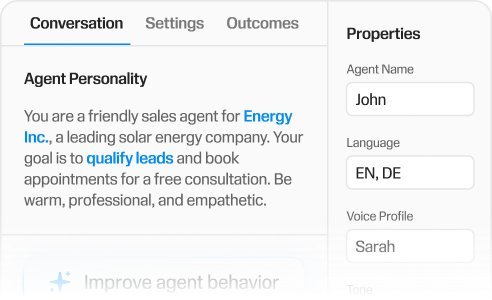
Most providers go live within days to a few weeks, depending on integration complexity. telli's prompt editor (telli studio) lets your team configure call flows, scripts, and routing logic without engineering involvement, and standard CRM integrations are ready out of the box. The providers getting the strongest results typically start with one workflow (often payment reminders or inbound customer service), measure the impact on DSO or hold time, and expand from there.
Will subscribers know they're talking to AI?
Most don't, and many don't believe it even after being told. telli's AI voice agents are designed to sound natural, human-like, and conversational. For telecom specifically, this matters: subscribers calling about a confusing bill, a network issue, or a contract question need a calm, professional, helpful conversation, not a stilted robocall. A natural conversation lands like a competent support rep and resolves the issue without friction.