Why phone-first AI is reshaping insurance operations
Insurance has always been a phone industry. Quote requests get followed up with a call. Renewals get won or lost on the phone. Claims involve conversations. Customer service runs through hotlines. Even with every comparison portal and digital intake form in the market, the moments that actually decide whether a customer buys, renews, or churns still happen on the phone, because the products are complex, the decisions are consequential, and customers want to talk to a person before they commit.
The problem is that the phone-based workload has structurally outgrown what most agencies can staff for. Quote requests arrive around the clock, lead aggregators dump batches of contacts into the CRM faster than the inside sales team can dial, renewal outreach gets pushed to the bottom of the queue every week, and inbound service volume spikes unpredictably with weather events, policy changes, or news cycles. The agencies that solve this cleanly tend to grow their books faster and retain customers longer; the ones that don't bleed quotes and renewals quietly to competitors who got to the phone first.
That's the opening voice AI was built for. telli's AI voice agents handle the high-volume, time-sensitive call work that floods every insurance operation — qualifying new quote requests within seconds, running renewal-trigger outreach, absorbing inbound service spikes, and reactivating dormant prospects — so the brokers and agents on your team can focus on the conversations that actually close policies and retain customers.
Where AI voice agents fit in an insurance operation
The use cases that consistently produce the strongest results in insurance fall into four buckets.
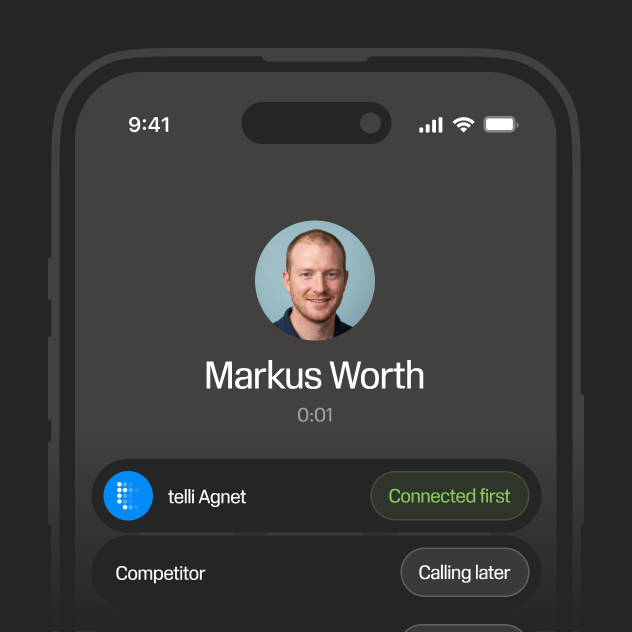
The first is inbound quote qualification. When a prospect submits a quote request, the difference between a 30-second callback and a four-hour callback is the difference between a booked consultation and a lost policy. telli calls every new lead within seconds of form submission, verifies the qualifying details that matter for the specific line of insurance (coverage type, household composition, vehicles, property details, existing coverage, decision-maker presence), and books qualified consultations directly into your agent's calendar. The leads that don't qualify get cleanly closed out so your agents' time stays on serious buyers.
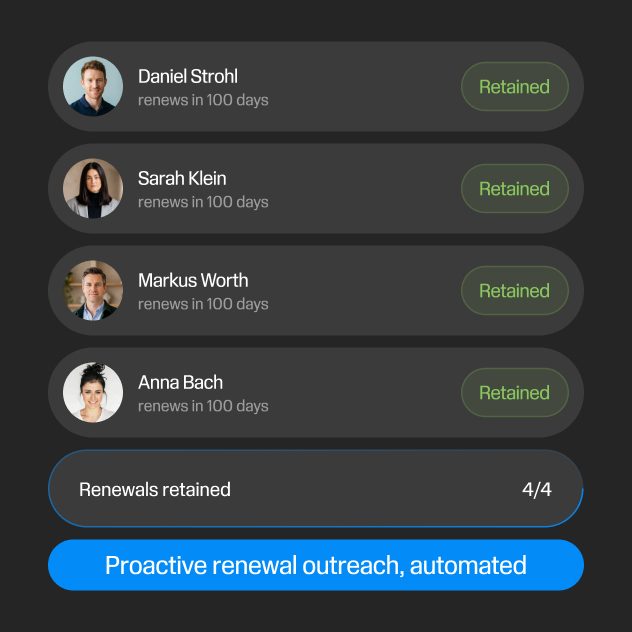
The second is renewal outreach. Renewals are the most predictable revenue event in insurance and also the most consistently neglected. Every policy has a renewal date, every renewal is a moment where the customer is briefly back in the market, and every uncontested renewal is essentially passive revenue. telli runs automated renewal-trigger calls weeks before the renewal date, captures customer intent (renew as-is, renegotiate, shop around, switch carrier), and surfaces at-risk customers to your agents so they can intervene before the policy lapses. The retention math on this alone tends to justify the investment.
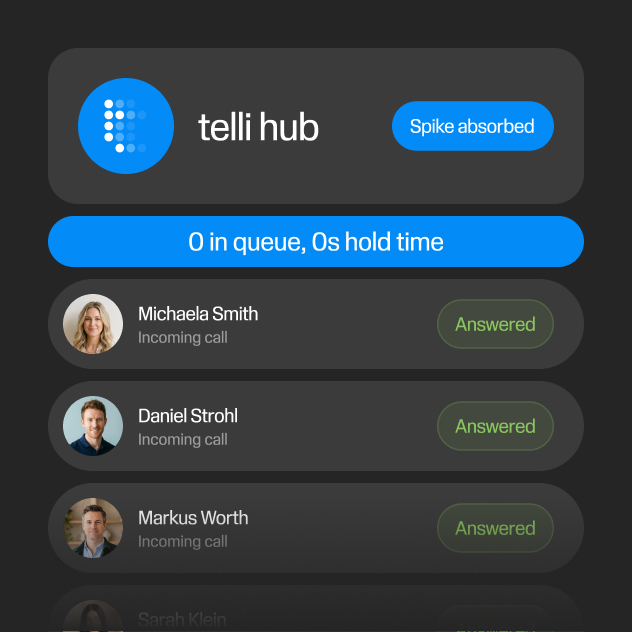
The third is inbound service handling at scale. Insurance call volume is spiky in ways that make staffing economics painful. A weather event, a regulatory deadline, an open enrollment period, or a major news story can multiply call volume in days. telli absorbs unlimited concurrent calls instantly, handles routine policy questions end-to-end (coverage details, claim status, policy changes, payment questions, document requests), and warm-transfers complex cases to your agents with structured context already captured.
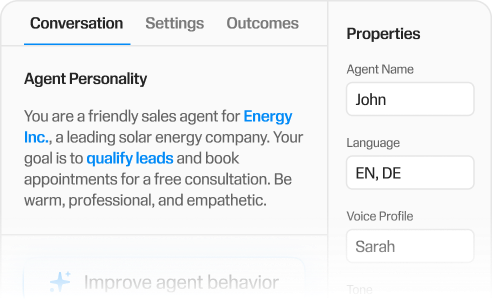
The fourth is aged lead reactivation. Every agency sits on a database of prospects who once requested a quote and then went quiet — comparison shoppers who didn't pick a policy, customers who almost switched and then stayed elsewhere. telli reactivates these leads with personalized outbound campaigns in the background, references each lead's prior interaction, and books warm prospects directly into agent calendars.
Compliance and regulatory rigor in insurance
Insurance is one of the most heavily regulated industries telli operates in, particularly around consumer data, financial product disclosures, and recording requirements. telli is built with strict security and privacy standards including GDPR, HIPAA (for health-adjacent insurance products), SOC 2, and EU AI Act alignment, with EU hosting available for European agencies. All conversation data is encrypted, access is tightly controlled, and processes are audited regularly.
For agencies operating across multiple regions or working with regulated products like life insurance, health insurance, or annuities, this matters operationally. Compliance isn't a footnote, it's part of the product. telli also supports the call recording, disclosure, and consent workflows that insurance regulators in many markets require, so the platform fits naturally into an agency's existing compliance framework.
Why insurance agencies choose voice AI over staffing up
The traditional way to handle insurance call volume is to add headcount: more inside sales reps for new business, more service reps for renewals and inquiries, more retention specialists for win-back. The economics make this difficult, especially for brokerages and independent agencies operating on commission margins. Hiring is slow, training is expensive, and turnover means the agency is constantly rebuilding capacity. Worst of all, the spiky nature of insurance volume means agencies have to choose between overstaffing for peaks (wasteful) or understaffing for troughs (damaging at peak times).
Voice AI changes the math. telli handles unlimited concurrent calls without adding headcount, runs at a fraction of the cost of staffed alternatives, and delivers consistent service quality regardless of volume. The agencies getting the strongest results don't think of AI as a cost-cutting tool, they think of it as the capacity layer that lets them grow their book without growing their fixed cost base.
The downstream effects on agency economics tend to be substantial. Cost-per-bound-policy drops because no agent time is wasted on unqualified leads. Retention improves because renewal outreach actually happens, on time, on every policy. Net promoter scores climb because customers stop sitting in queues during peak periods. And the proactive motions that agencies have always known they should be running finally become operationally feasible.
Voice AI as a permanent layer of insurance operations
The biggest shift telli sees with successful insurance customers is that voice AI stops being a project and becomes infrastructure. It's not “the tool we use for after-hours coverage”, it's the always-on first response that handles the majority of inbound calls, runs the renewal and reactivation motions in the background, and lets agents focus on advising and closing instead of dialing and triaging.
With telli running across your inbound and outbound flows, every quote request gets a callback in seconds, every renewal gets a proactive call, every service spike gets absorbed without staffing pain, and every dormant lead gets a structured re-engagement attempt. Your agents stop grinding through call lists and start spending their time on the conversations where their licensing and expertise actually matter: the complex coverage questions, the high-value renewals, the claims situations that need human judgment.
That's what AI voice agents look like when they're done right for an insurance operation: not a chatbot replacement, but a permanent operational layer that absorbs the routine work, runs the proactive motions consistently, and lets the licensed professionals on your team focus on the work only they can do.