We all remember a time when we got truly great service. You called and they knew who you were. You didn’t have to explain everything again. They solved your problem in the same call. And they never called you at a bad moment.
That kind of service has become rare, and not for lack of will. To serve millions of customers, companies had to make compromises. That’s how we got chatbots that forget what you said five minutes ago, forms that ask for what you’ve already answered a thousand times, tickets that turn you into a number, phone menus with twelve options before you can talk to someone, and call queues that test anyone’s patience.
Anyone who has run a contact center knows the math, inbound and outbound alike. How many agents do I staff so they’re not idle, without leaving 20% of calls unanswered? How do I handle peaks, and what do they cost me? Meanwhile, the lead who filled in the form at 11:05 gets a call in the afternoon, after already talking to two competitors. The technician appointment nobody confirmed ends in a failed visit. And the pending payment, the renewal or the survey never gets done, because on Monday everyone has to cover inbound.
Contact centers don’t lack talent. What they lack is capacity, and that’s exactly what telli provides.
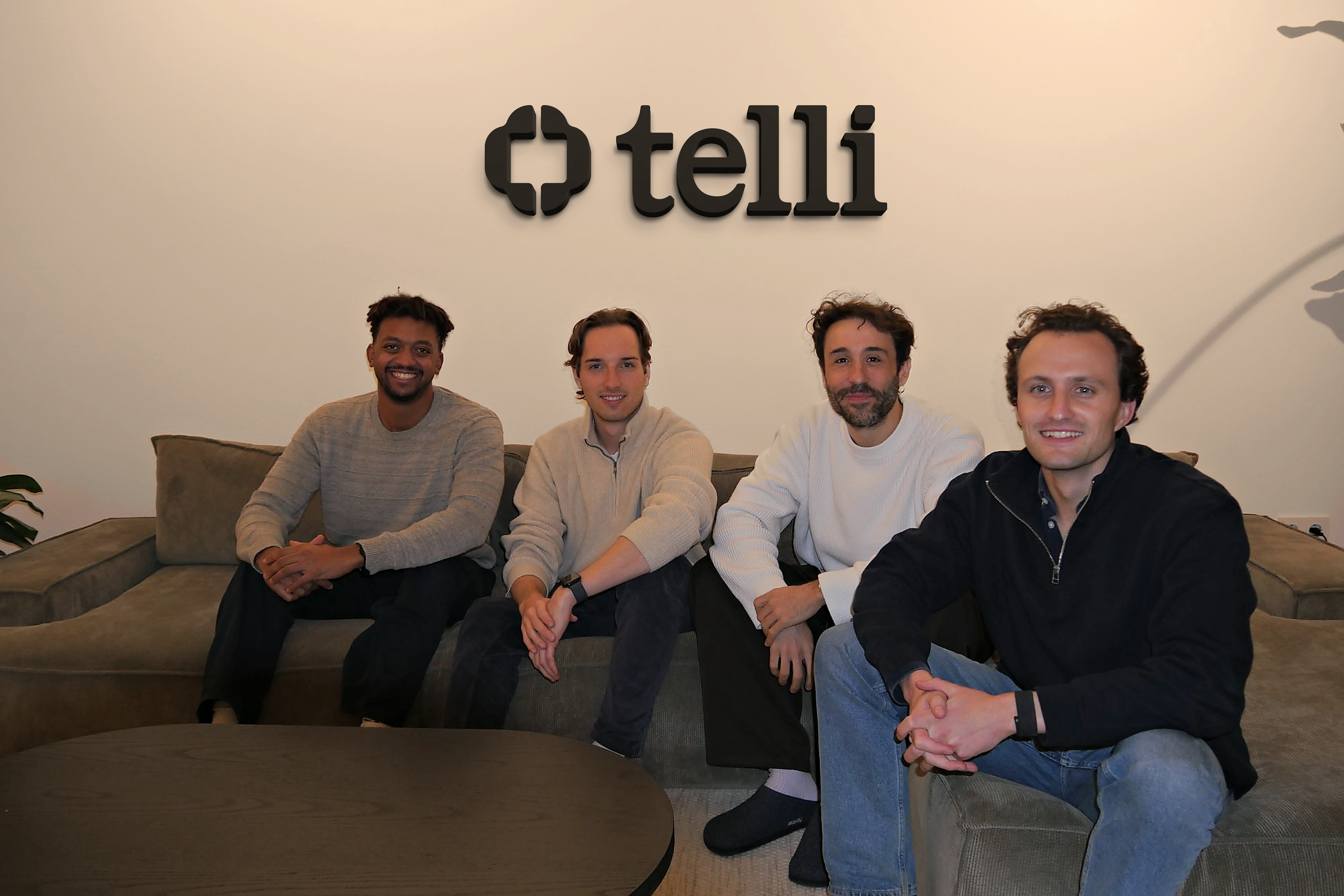
telli is a German company expanding across Europe, with a team already working in Spain. We’re backed by redalpine, Cherry Ventures and Y Combinator, among others, and have raised $18.5M in the last two years.
We build AI to run customer-facing operations. Our agents understand each customer’s context, take action and improve with every conversation. They work at any volume, in the customer’s language and on the channel the customer prefers. In practice, they call a new lead within the first minute, confirm and reschedule visits, make payment reminder calls and handle first-level support, even outside office hours.
We treat a company’s internal teams as customers too, because they deserve the same context as the people calling in. When a conversation needs a person, the agent hands it over to the team with the full context, saved directly in the CRM the company already uses, with native integrations for HubSpot, Salesforce and others.
We work with more than 150 companies in Europe, including Engel & Völkers, Vaillant and Verivox, and already manage millions of calls for them. Sky, for example, went live with telli in under three weeks.
Today anyone can generate a voice that sounds human. The hard part is for the agent to know who it’s talking to and what happened last time, and to adapt to each company’s processes and improve them. For that, it has to be connected to the CRM without the tech team having to build anything. It also has to call at the right moment and know when to hand the conversation to a person and when not to. And it has to know when to be persistent in a sale and when to be patient with a customer inquiry. All of this has to comply with GDPR and the EU AI Act, with data hosted in the EU. That’s what decides whether a voice agent works in production or stays a nice demo.
Our agents introduce themselves as what they are: an AI assistant. Nobody on the other end of the line should feel deceived. And to be honest, most people forget about it within a few seconds.
We believe technology should expand service capacity, not take away closeness. With our customers, the agent handles first contact and the repetitive work, so the team can spend its time on the conversations that need a person: the sale, the difficult complaint, the vulnerable customer. For many contact centers and BPOs, telli is extra capacity inside the operation they already run.
We’ve already started in Spain, with agents that speak Spanish in native voices. We know it’s not enough to translate what works in Germany. In Spain, customers expect a more personal relationship, the phone plays a bigger role, and people are more skeptical of AI on the phone. We take that seriously.
That’s why we want to be part of AEERC. We want to learn from those who have spent years managing customer relationships in Spain, work with the brands and BPOs already testing AI in their operations, and share what we’ve learned in Germany, including what didn’t work.
For us, AI in customer service only makes sense if it brings back what great service used to feel like: someone who knows your context, listens, and solves your problem in one call.
Would you like to hear one of our agents speak Spanish, or compare notes on AI in customer service? Feel free to reach out to me directly at gonzalo@telli.com. See you at the Congreso Contact Center in Madrid on February 17, 2027.
Gonzalo Pérez, Country Manager Spain at telli

 Gonzalo Pérez