
AI can make your company more human
 Charles Lorin
By Charles Lorin, Country Manager for France at telli
“We want to keep the human touch. It’s one of our values.”
I hear this often from French business leaders when AI comes up. It’s a fair concern. They want to protect the customer experience.
But think about the experience many customers already have. They wait on hold, navigate a phone menu, press 1, then 3, and are rewarded with a tinny saxophone looping Careless Whisper.
I have nothing against George Michael. I just doubt he meant to run your customer service department.
If they haven’t hung up by then, they finally reach a person. Unfortunately, nobody can help without the reference number on a bill from 2017. A slight exaggeration, perhaps.
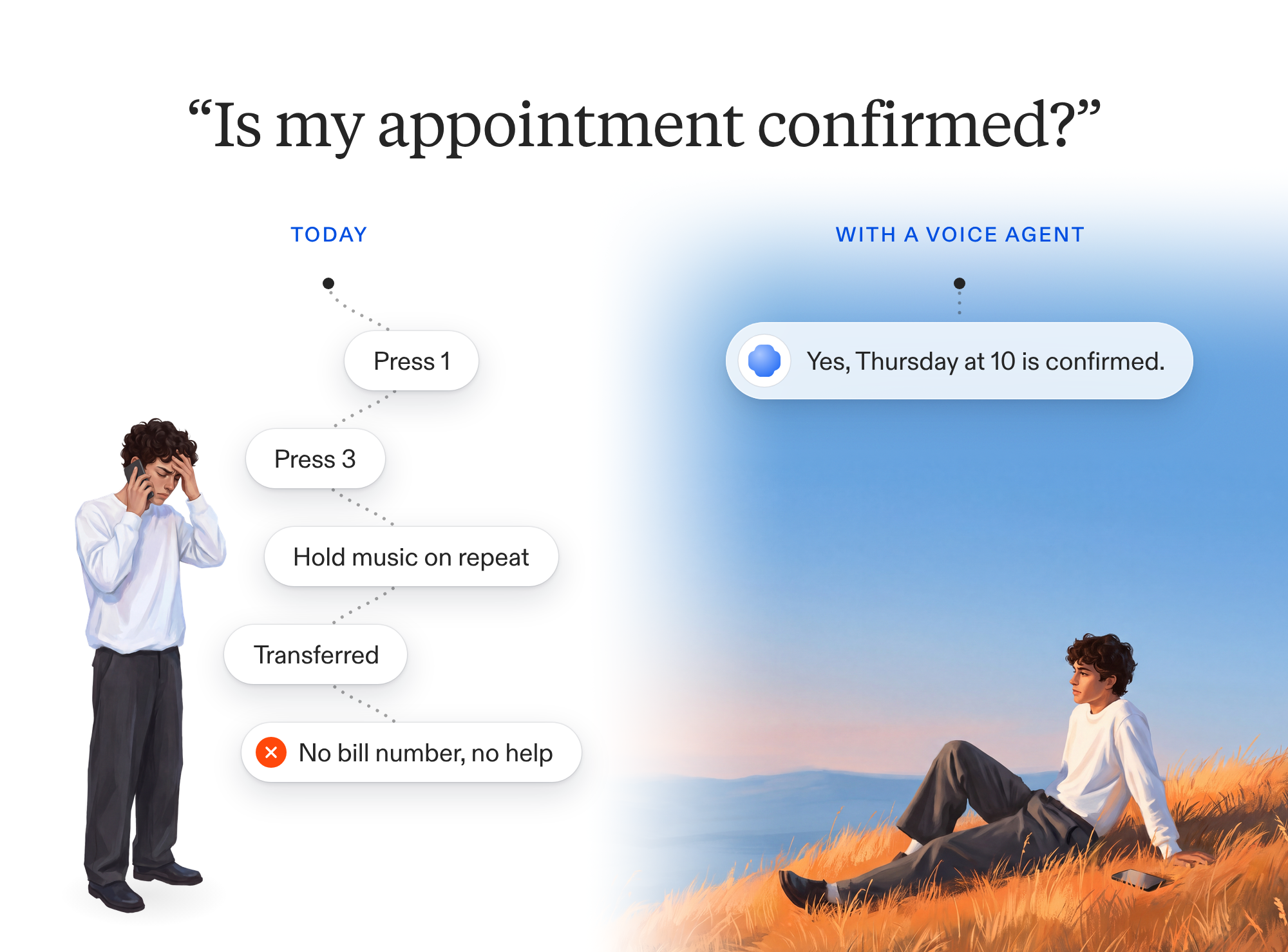
The question is what customers actually need from a company, and what its people need in order to help them. Used well, AI could improve the experience for customers, give teams more room to do their jobs and produce better results for the business. That is a more meaningful way to honor a promise to “stay human.”
What customers are looking for
When someone contacts a company, they usually want one of two things. They may simply need to know whether an appointment is confirmed, what is happening with their case or which documents are missing. At that moment, a fast, accurate answer is the service they need.
At other times, an answer is not enough. They are weighing options, questioning a decision or looking for expert advice. They need someone to understand their situation and help them choose.
Often, these needs come one after the other: first an answer, then a conversation. Unfortunately, we turn confirming an appointment into an expedition, then rush the conversation that actually needs a person.
A good customer journey makes room for both.
Give people answers, not obstacles
An AI system connected to reliable information can find a customer’s record, answer a specific question and pass the request to the right person when a conversation needs to continue.
Making the machine sound human is beside the point. What matters is whether the experience is more considerate of the person asking for help. That means removing obstacles we have grown used to accepting. For someone who struggles with long forms, saying what they need may be easier than filling in another one.
At Homeday, a real estate company, a voice agent answers calls around the clock. The company reports that 75% of calls are resolved directly or routed to the right place, adding 35 hours of inbound call capacity each week.
The more interesting question is what happens with the time that creates. Homeday says its team can focus on work that calls for their attention and expertise.
Give people time for the conversations that matter
In real estate, insurance or car sales, people do not always end up buying what they first asked about. A good advisor learns what really matters through conversation: the daily commute, space for a child, a concern no search filter could capture. They use their judgment to suggest what fits.
If AI has already answered the factual questions, captured the request and passed on the context, the advisor can begin somewhere more useful than square one. They can listen, interpret and advise. The customer gets a prompt answer and a conversation worth having.
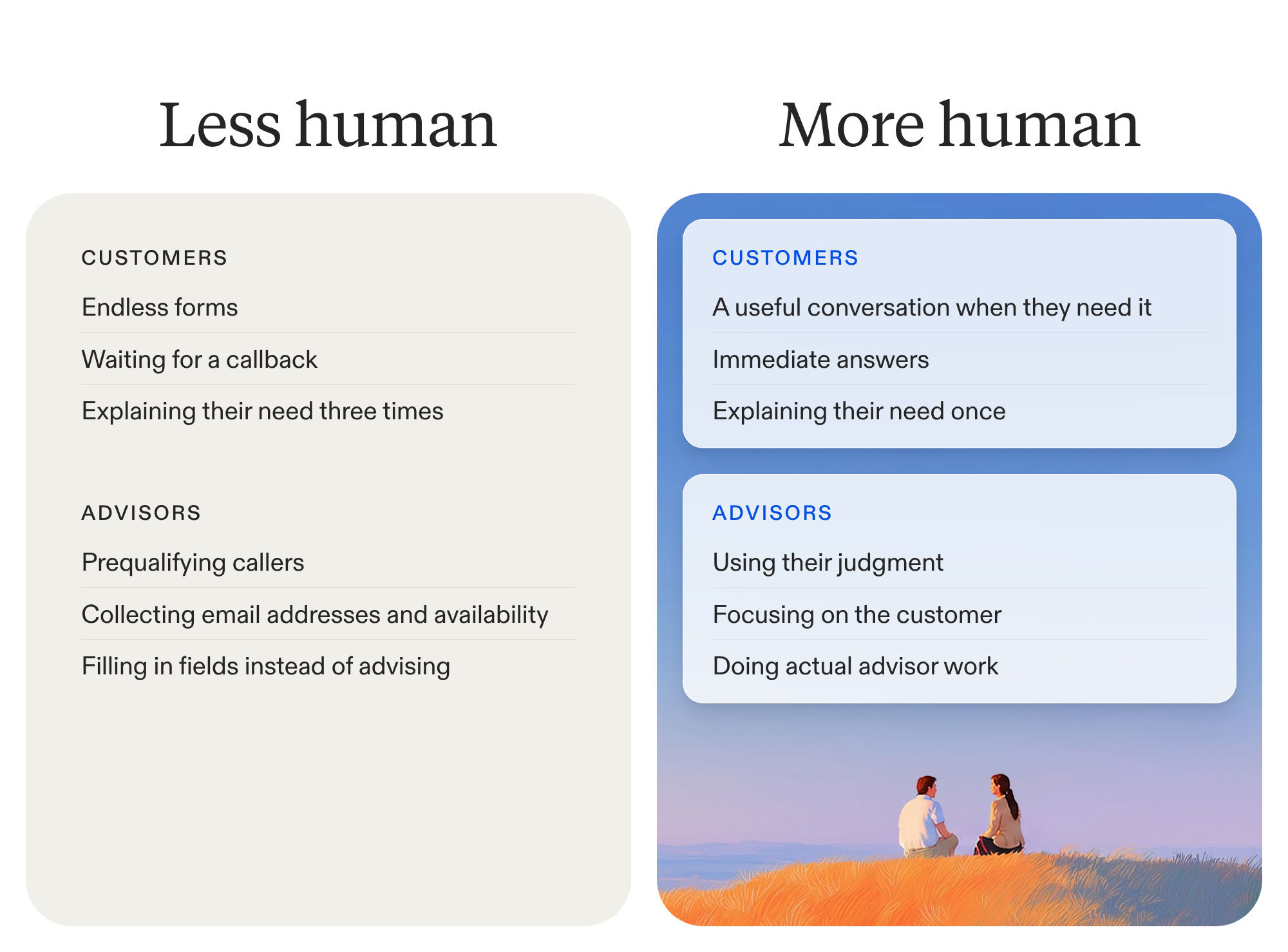
Yet across industries, we hire people for their ability to understand customers, then fill their days with screening, data entry, information gathering and follow-up emails. We ask them to document conversations before giving them time to have them. Administrative work will not disappear, but it need not consume the job.
A better outcome for customers, teams and the business
These three interests can reinforce one another. Customers want help without losing their day. Advisors want to use their skills rather than recite a procedure. Businesses need good service to earn trust and repeat business.
Consider the property buyer. An answer that evening keeps their search moving. The next day, an advisor who knows the context can have a useful conversation and suggest a property that fits their plans. When that works, everyone benefits. AI has helped make the relationship more human.
That gives us a better way to judge success. Did the customer get the right answer? Did they have to repeat themselves? When they needed advice, did the advisor have the context and freedom to give it? Did the experience help the customer decide, return or recommend the company? Those questions are more ambitious than “How many calls did we automate?”
That change has to be built with the people who speak to customers every day. As Thierry Spencer reports from the 2026 French Observatory on AI in customer service, 45.5% of frontline advisors surveyed cited a loss of human connection as a risk of AI. Across all roles, respondents rated the support they received in learning to use AI tools just 5.16 out of 10.
Giving advisors back time means little if they are then left alone with the hardest requests. They need a say in how customer journeys are designed, the context to pick up each conversation, and the training and freedom to advise.
“Staying human” is too modest an ambition. We can become more human in the way we serve people. Give customers clear answers when they need them. Give advisors the context and time to listen when a conversation matters.
Values, after all, do not answer the phone.